Playbooks
Rank Inside the Thread
The Rule
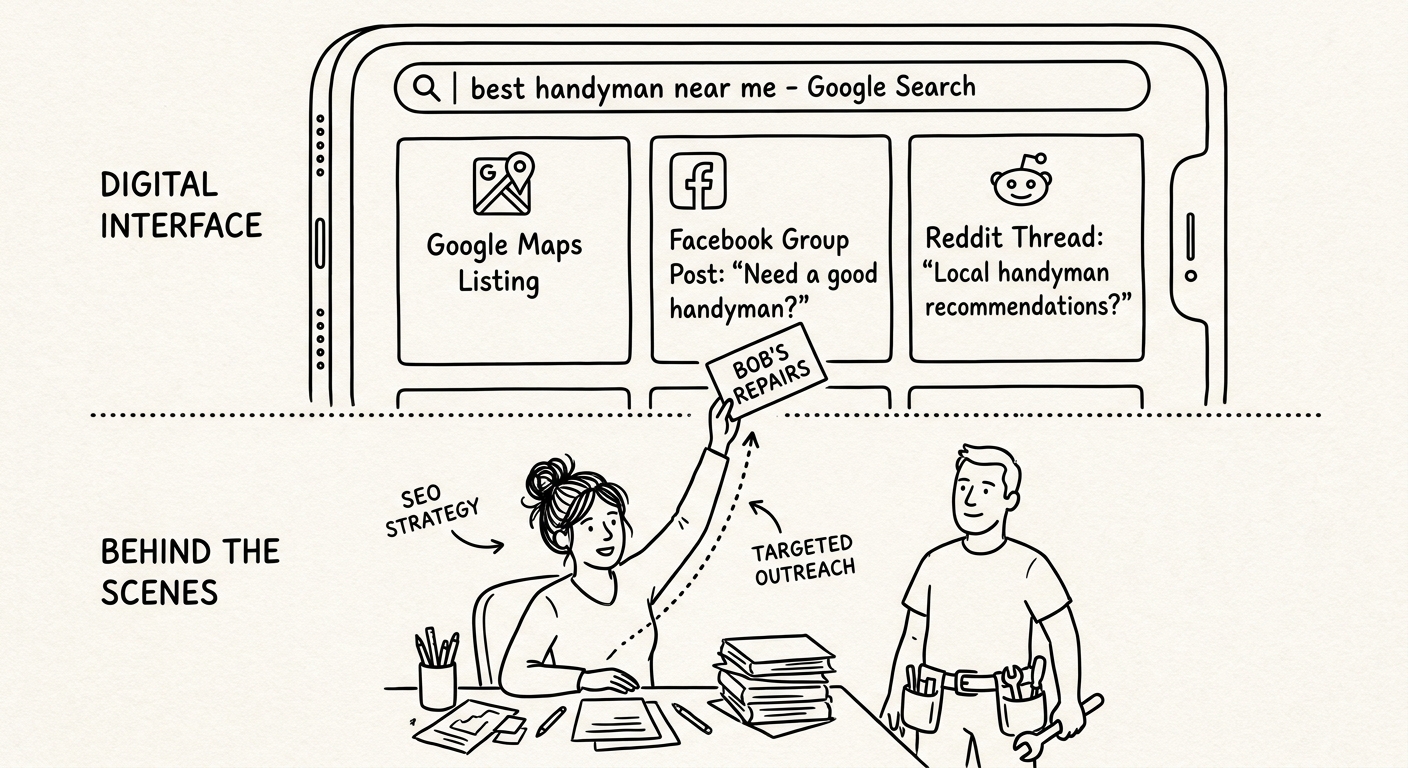
Section titled “The Rule”Someone in Spanish Fork searches “handyman Spanish Fork” on Google. The top five results are not five handyman websites. They are the Google Maps 3-pack, a Facebook community thread asking for a recommendation, a Reddit thread in r/HomeImprovement, maybe one actual business website, and another community recommendation thread.
Community threads rank because they match search intent exactly. A real person asking for a real recommendation, with real replies. Google treats that as a strong signal. So the fastest way to rank for a local service search is not to build another competing website. It is to be the recommendation inside the threads that already rank.
The Setup: Community Threads Are the Search Results
Section titled “The Setup: Community Threads Are the Search Results”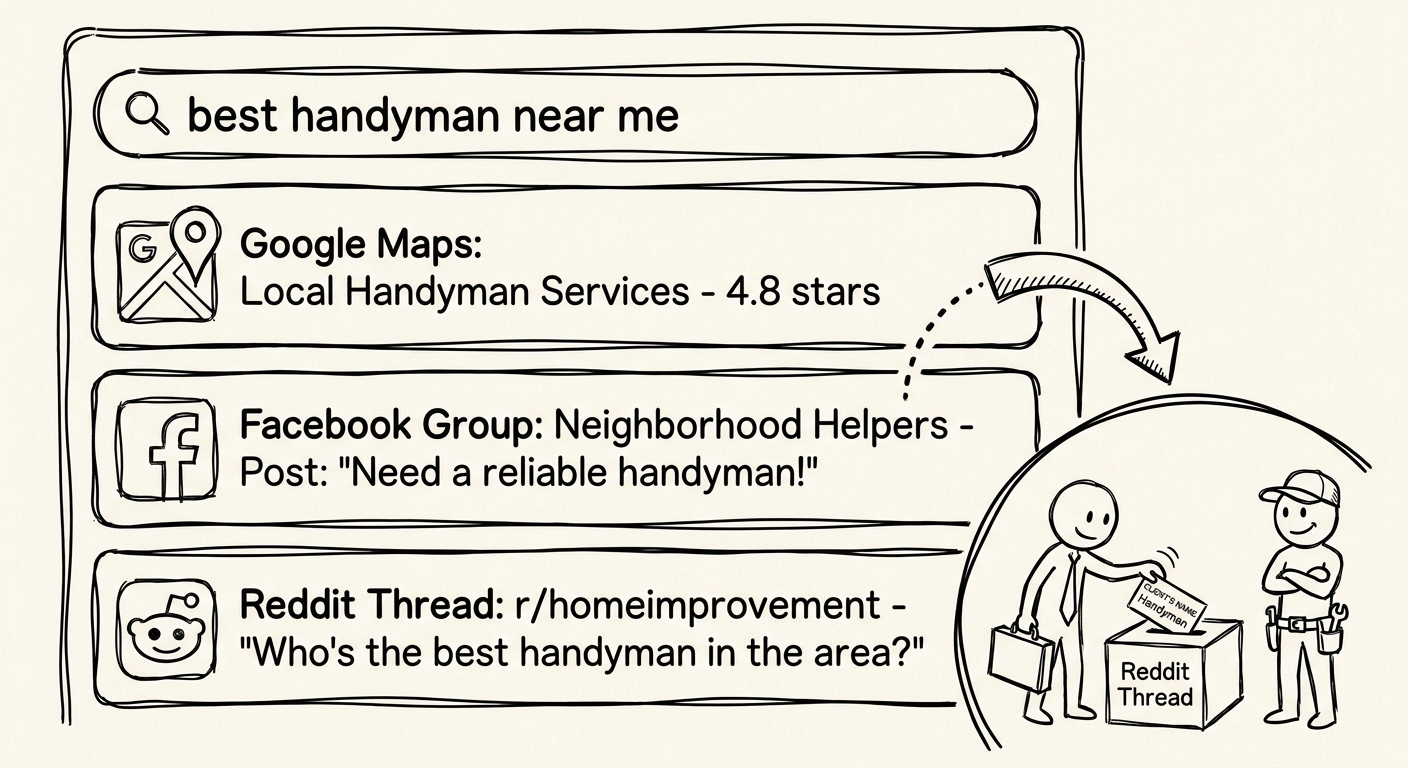
For any “[service] [city]” query, the mix of organic results usually includes at least one community thread. The thread has already been indexed, has replies, and ranks on page one for the exact search the prospect just typed. That is what you are looking for.
To find them, search the way your prospect would: “best handyman Spanish Fork,” “handyman recommendations Utah County,” “who does handyman work in Spanish Fork.” Keep a running list of the threads that rank for your client’s service-plus-city queries. Those threads are the places where the recommendation has to live.
The Play: Be the Recommendation
Section titled “The Play: Be the Recommendation”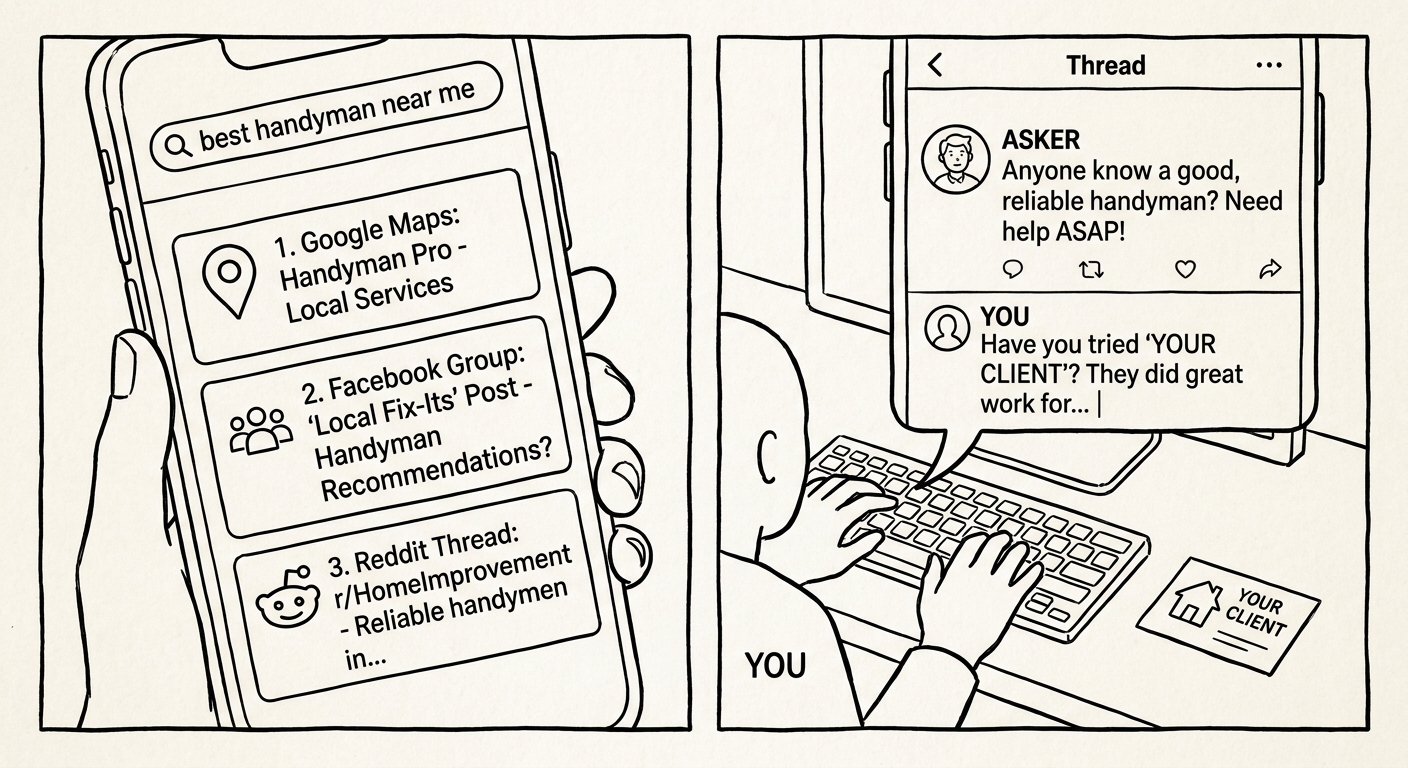
Three levels, easiest to most aggressive.
Level 1: Know the client does good work. Firsthand or secondhand. Do not recommend anyone you cannot vouch for. The whole play collapses if the lead has a bad experience and comes back to the same thread to complain about your recommendation. The recommendation is your reputation inside that community.
Level 2: Proactively monitor and recommend. Keep a watchlist of threads that rank, plus the groups where new questions tend to get posted. When a fresh question drops, a real human recommendation from an active group member is what the asker picks. Speed matters. The first few replies usually win the lead because the asker stops reading after they have a name or two to call.
Level 3: Seed the question yourself. If the right question is not being asked, ask it from one account and have a separate account drop the recommendation. Use sparingly and keep it realistic. A thread with one generic reply looks obviously planted. A thread with four or five honest-looking replies from different accounts looks like an actual community conversation.
The recommendation itself should sound like a neighbor, not a sales pitch. “I used Bob’s Repairs last month for a water heater thing, solid work, fair price” beats “BOB’S REPAIRS IS THE BEST, CALL 555-1234” every time.
The Bonus: Real-Time Listening
Section titled “The Bonus: Real-Time Listening”The manual version works but does not scale. The upgrade is social listening. A tool that watches specific Facebook groups for trigger phrases like “handyman,” “plumber,” or “who does,” and pings you the second a new thread appears. That is the window when a recommendation lands cleanly, before five other replies bury it.
We sell a Facebook group listener tool that does exactly this. It watches the groups you configure, filters for the keywords you care about, and notifies you in real time so you can be first in the thread with the recommendation.
Why It Works
Section titled “Why It Works”The prospect trusts a neighbor’s recommendation inside a community group more than a paid Google ad or a polished landing page. That trust is the whole game. The ranking is just what puts you in front of it. And the threads that rank are doing the hard work of SEO for free. All you are doing is showing up with something useful to say.
Related
Section titled “Related”- Comment Ladder DM Technique — for turning commenters into leads after they engage with your reply
- Facebook Group Email Collector — for turning listener-tool wins into a durable contact list