Playbooks
The Comment Ladder DM Technique
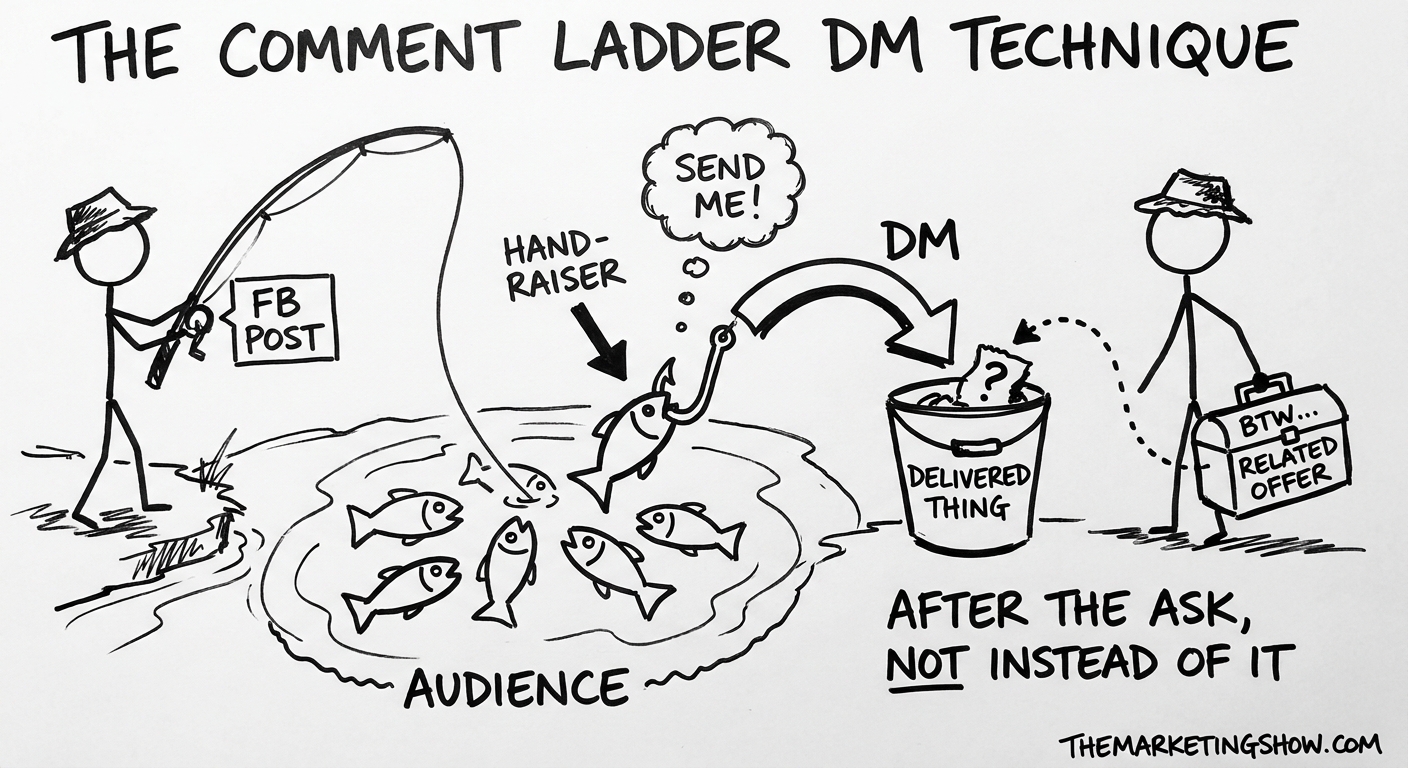
What It Is
Section titled “What It Is”Post something with a clear hand-raise invitation (“comment ‘yes’ and I will send you the checklist”). When someone comments, DM them the thing they asked for. After delivering, add a short “by the way” that points them to something related — usually a paid offer, a next step, or a deeper resource.
Three moves: hand-raise → delivery → aware mention. The technique only works in that order.
When To Run It
Section titled “When To Run It”- Any post where the content itself is valuable to more people than will read it. A checklist, a template, a swipe file, a script — something people will DM for if they see it once.
- Audiences that are warm but not buying. Lots of engagement, no sales. The comment ladder gives you permission to move the relationship one step closer without a hard pitch.
- When the related offer truly relates. If someone asks for a CRM comparison spreadsheet, the “by the way” can mention a CRM setup service. If they ask for a lead-gen checklist and the BTW is about a cooking class, it breaks.
Do not run this on an audience that has never seen you before. The hand-raise only works if the post itself earned the attention.
The Steps
Section titled “The Steps”- Post the hand-raise. A teachable Facebook post, Reel, or short video. End with a specific comment prompt: “Comment ‘SEND ME’ and I will DM you the {thing}.” Be explicit about the CTA — vague prompts get no engagement.
- Watch the comments. Every “yes” / “send me” / “interested” is a hand-raise. Respond to the comment publicly (“sending now!”) so other readers see that the DM actually happens.
- DM the thing first. Do not lead the DM with an offer. Lead with the deliverable: the checklist, the link, the PDF, whatever they asked for. Zero strings.
- Then the “by the way”. In the same DM thread, after they have received value, add one short line: “BTW, if you want help actually implementing this, I do {thing}. Here is the link.” One sentence, soft. Never a pitch deck.
- Close warm. If they say no or do not reply, thank them for engaging and move on. Do not follow up the BTW.
Why It Works
Section titled “Why It Works”- You earn the right to pitch by delivering first. The hand-raise is a micro-commitment. Delivering before asking anything flips the reciprocity switch.
- The BTW is contextually aware. You are not pitching random people — you are mentioning a related offer to someone who just raised their hand for the adjacent topic. The pitch is relevant by construction.
- It is soft enough to survive a “no”. A “by the way” costs you nothing and leaves the relationship intact. A hard pitch in the first DM burns the contact.
- The public reply builds proof. When other readers see “sending now!” in the comments, they see that this actually happens. Next hand-raise is easier to earn.
Common Mistakes
Section titled “Common Mistakes”- Leading the DM with the pitch. If the first message mentions the offer before delivering the thing, the recipient feels bait-and-switched. Deliver first. Always.
- Pitching something unrelated. If the hand-raise is for a spreadsheet template and the BTW is for a coaching call on a different topic, the context is broken. Either match the related offer to the hand-raise, or skip the BTW entirely.
- Following up aggressively. The BTW is a soft mention. If they engage with it, keep going. If they do not, leave it alone — do not send a second DM nudging the offer.
- Scripting the DM word-for-word. Recipients can tell when they are talking to a template. Write each one fresh, even if the structure is the same.
- Running this on a cold audience. If the hand-raise post is the first thing someone sees from you, the trust is not there yet. The technique assumes warm attention.
Related
Section titled “Related”- Generate an Image — the doodle above was made with this capability